

When it comes to household cleaning, homeowners are constantly searching for products and methods that deliver real results without wasting time or money. Walk through any cleaning aisle and you’ll find dozens of products promising to remove stains, eliminate grime, and restore surfaces to their original shine. At the same time, many people continue to rely on traditional DIY cleaning solutions passed down through generations.
One of the most common cleaning debates centers around abrasive cleaning pastes and the classic combination of baking soda and vinegar. Both have loyal supporters, and both claim to tackle some of the toughest cleaning jobs around the home. But when put head-to-head, which option truly performs better?
Let’s take a closer look at how these two cleaning methods compare in real-world situations and determine which one deserves a place in your cleaning routine.
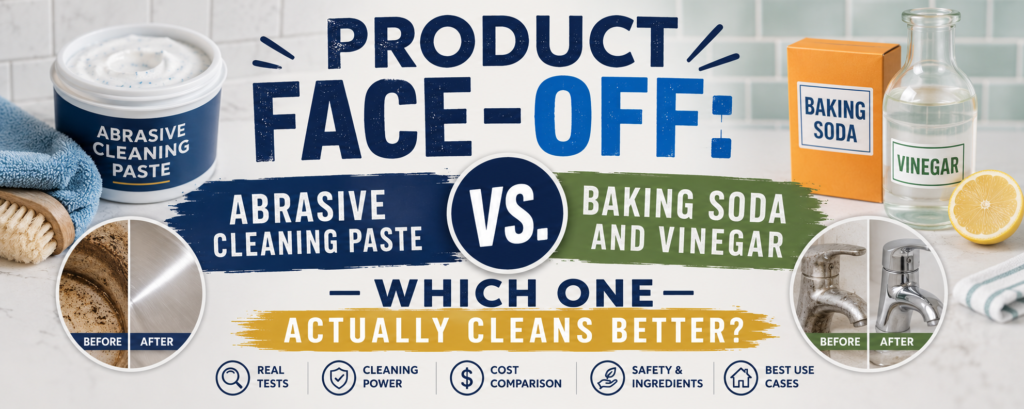
Understanding Abrasive Cleaning Paste
Abrasive cleaning pastes have gained popularity because they are designed specifically to remove stubborn dirt, soap scum, grease, hard water stains, and surface discoloration. These products typically contain fine abrasive particles that help scrub away buildup without causing significant damage when used correctly.
Many homeowners appreciate these pastes because they require minimal effort. A small amount applied to a damp sponge can often remove grime that has accumulated over weeks or even months.
The appeal is simple: less scrubbing, faster results, and a cleaner-looking surface.
Common surfaces where abrasive cleaning paste is frequently used include:
- Bathroom sinks
- Bathtubs
- Shower doors
- Kitchen countertops
- Stovetops
- Stainless steel fixtures
- Grout lines
Because of their concentrated formulas, these products are often marketed as all-purpose cleaning solutions.
Understanding the Baking Soda and Vinegar Method
The baking soda and vinegar combination has been a household staple for decades. The mixture creates a fizzing reaction that many people associate with deep cleaning power.
Baking soda acts as a mild abrasive, while vinegar is acidic and helps break down mineral deposits, soap residue, and certain types of grime. Together, they create a bubbling action that can help loosen dirt from surfaces.
This DIY solution is commonly used for:
- Sink cleaning
- Drain freshening
- Shower maintenance
- Oven cleaning
- Tile cleaning
- Refrigerator cleaning
Many homeowners choose this method because the ingredients are inexpensive and readily available.
However, popularity doesn’t always equal performance.
Round One: Cleaning Power
When comparing raw cleaning strength, abrasive cleaning paste generally comes out ahead.
Tough stains, baked-on grease, soap scum, and hard water deposits often require significant scrubbing when using baking soda and vinegar. While the mixture can loosen dirt, it doesn’t always remove heavy buildup efficiently.
A quality abrasive cleaning paste is specifically formulated to tackle stubborn messes. The cleaning agents work alongside the mild abrasive particles to lift grime faster and more effectively.
For example, removing soap scum from a shower wall may take several applications of baking soda and vinegar. An abrasive paste often achieves similar results in a single application.
Winner: Abrasive Cleaning Paste
Round Two: Surface Safety
Cleaning effectiveness means little if a product damages surfaces.
This category is much closer.
Baking soda is generally considered safe for most household surfaces. Vinegar, however, can present challenges. Because vinegar is acidic, it can damage certain natural stone surfaces such as marble, granite, and travertine over time.
Abrasive cleaning pastes can also cause issues if used improperly. Excessive scrubbing or use on delicate finishes may lead to scratching.
The key factor is following manufacturer recommendations and understanding which surfaces are appropriate for each cleaning method.
For homeowners with sensitive stone surfaces, neither option should be used without careful consideration.
Winner: Tie
Round Three: Ease of Use
Convenience matters.
Most people don’t want to spend their weekend mixing solutions, testing products, and scrubbing for hours.
Abrasive cleaning paste offers a major advantage here. The product is ready to use immediately. Simply apply it, scrub lightly, and wipe away residue.
The baking soda and vinegar method often requires multiple steps:
- Apply baking soda.
- Add vinegar.
- Wait for the reaction.
- Scrub thoroughly.
- Rinse completely.
While not overly complicated, the process is certainly more time-consuming.
Busy homeowners often prefer products that streamline the cleaning process.
Winner: Abrasive Cleaning Paste
Round Four: Cost
One reason baking soda and vinegar remain popular is affordability.
A box of baking soda and a bottle of vinegar can handle numerous cleaning tasks for a relatively low cost.
Abrasive cleaning pastes are more expensive upfront. Although a little product typically goes a long way, the purchase price is usually higher than basic pantry ingredients.
For budget-conscious households, DIY cleaning methods can provide decent results at a fraction of the cost.
Winner: Baking Soda and Vinegar
Round Five: Versatility
Both options are surprisingly versatile.
Baking soda and vinegar can be used throughout the home for cleaning, deodorizing, and light maintenance. Many homeowners use the mixture in kitchens, bathrooms, laundry rooms, and even outdoor spaces.
Abrasive cleaning pastes also work on a wide range of surfaces and cleaning challenges.
The difference lies in performance. While both can be used in multiple locations, abrasive cleaning paste often produces stronger results when dealing with stubborn stains and accumulated buildup.
Winner: Slight Edge to Abrasive Cleaning Paste
The Real-World Test
Professional cleaners often encounter situations where standard household methods simply aren’t enough.
Soap scum that has built up over months, greasy kitchen surfaces, and hard water stains require more than a bubbling chemical reaction. In these cases, specialized cleaning products usually outperform DIY mixtures.
That doesn’t mean baking soda and vinegar have no place in household cleaning. They remain useful for light maintenance and minor cleaning projects.
However, when homeowners are preparing for guests, moving into a new home, or tackling neglected areas, stronger cleaning products often save significant time and effort.
Many clients searching for house cleaning Plano TX services are surprised by how much difference professional-grade cleaning methods can make compared to common DIY solutions.
When DIY Cleaning Stops Being Effective
Every homeowner reaches a point where routine cleaning no longer produces the desired results.
You scrub the bathroom repeatedly, yet stains remain. The kitchen still looks dull despite your efforts. Dust seems to return immediately after cleaning.
At that stage, the issue often isn’t the product itself — it’s the level of buildup that has accumulated over time.
This is why many residents looking for maid service Plano TX options eventually decide to bring in professionals. A thorough cleaning can restore surfaces and create a fresh baseline that’s easier to maintain going forward.
Professional cleaners use proven techniques, specialized equipment, and products suited for specific surfaces and cleaning challenges.
Which Option Is Better for Busy Families?
For households juggling work, school schedules, activities, and everyday responsibilities, convenience often becomes the deciding factor.
While baking soda and vinegar can work, the additional effort may not fit into a packed schedule.
Abrasive cleaning paste provides faster results, but even that requires time and energy.
Many homeowners searching online for house cleaners near me Plano are ultimately looking for something more valuable than a cleaning product: time.
Delegating cleaning responsibilities allows families to focus on work, relaxation, and spending time together instead of spending entire weekends scrubbing bathrooms and kitchens.
The Final Verdict
After comparing cleaning power, safety, convenience, cost, and versatility, abrasive cleaning paste emerges as the overall winner.
While baking soda and vinegar remain useful for light cleaning tasks and budget-friendly maintenance, they simply don’t match the performance of a quality abrasive cleaning paste when dealing with tough household messes.
Here’s the final score:
- Cleaning Power: Abrasive Cleaning Paste
- Surface Safety: Tie
- Ease of Use: Abrasive Cleaning Paste
- Cost: Baking Soda and Vinegar
- Versatility: Abrasive Cleaning Paste
For homeowners seeking faster and more effective cleaning results, abrasive cleaning paste offers a clear advantage.
Of course, even the best products have limitations. Some cleaning projects require more than a bottle or a sponge. That’s why many homeowners turn to affordable house cleaning Plano services when deep cleaning becomes overwhelming or time-consuming.
Whether you’re maintaining a spotless home or tackling months of accumulated grime, choosing the right cleaning method can make all the difference. And for those times when the workload becomes too much, professional residential cleaning Plano TX services can help restore your home to its best condition while saving you countless hours of effort.
Contact us at 817–609–7374 or visit https://maidmasterstx.com/plano-house-cleaning/ to book your service.