

When it comes to House Cleaning Plano TX, one of the most overlooked cleaning mistakes is continuing to use a cloth after it has already absorbed too much dirt, grease, moisture, and cleaning solution. A rag may look usable at first glance, but once its fibers become overloaded, it can stop picking up residue effectively and begin spreading it across surfaces instead. This can leave countertops streaky, tables sticky, and frequently touched areas looking dirty even after they have been wiped.
The problem is not always the cleaning product or the surface itself. Sometimes, the real issue is knowing when a cloth has reached its saturation point. Professional cleaners understand that effective cleaning involves more than wiping a surface repeatedly. It requires the right folding technique, proper cloth rotation, appropriate rinsing, and the judgment to recognize when a fresh cloth is necessary.
For homeowners looking into Plano cleaning services, understanding this simple cleaning principle can make everyday maintenance more effective. Whether you are handling routine household chores or preparing for a detailed cleaning session, using a clean cloth at the right time can help reduce streaks, improve hygiene, and prevent dirt from traveling from one area to another.
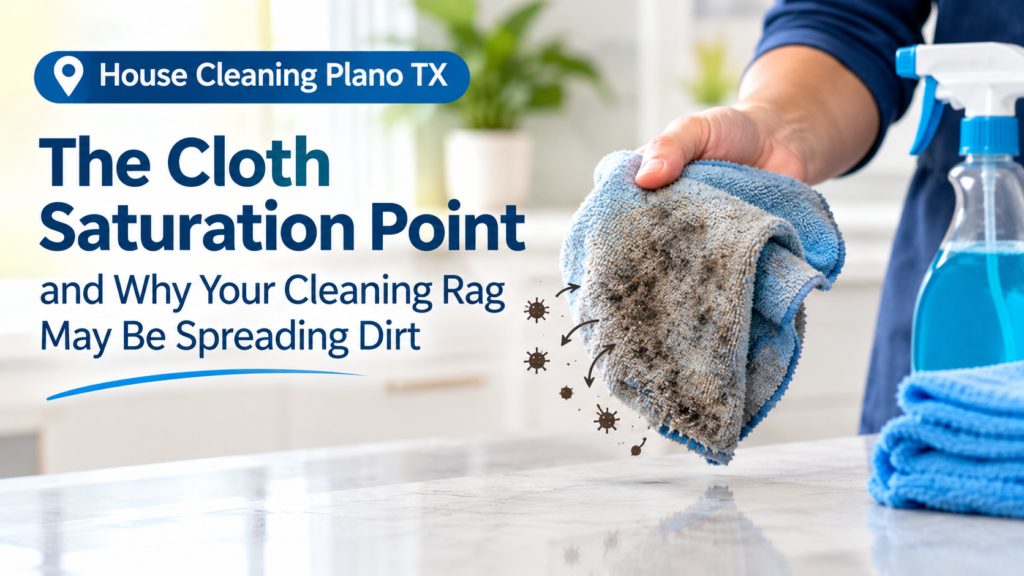
What Is the Cloth Saturation Point?
The cloth saturation point is the stage at which a cleaning rag has accumulated enough soil, moisture, grease, or cleaning product residue that it can no longer perform effectively. Although a cloth may still feel damp and appear relatively clean, its fibers may already be holding the material you are trying to remove.
A microfiber cloth, cotton rag, or reusable cleaning towel can absorb and trap dirt, but that ability has limits. As the cloth collects more residue, the available clean surface area decreases. Eventually, instead of lifting dirt away, the cloth may drag it across the surface.
This is especially noticeable when cleaning kitchen counters, bathroom vanities, dining tables, glass surfaces, and appliance exteriors. A homeowner might wipe the same spot several times without realizing that the rag itself is responsible for the remaining streaks.
Signs Your Cleaning Rag Has Reached Its Limit
Watch for these common indicators:
- Visible discoloration: The cloth develops gray, brown, yellow, or greasy patches from accumulated soil.
- Persistent streaks: Surfaces remain cloudy or smeared after several passes.
- Greasy residue: Instead of removing oil, the rag leaves a slippery film behind.
- Unpleasant odors: A damp cloth develops a musty or sour smell.
- Reduced absorption: Water or cleaning solution begins pooling rather than being absorbed efficiently.
- Dirt transfer: A previously cleaned area becomes visibly dirty after another wipe.
Not every sign means the cloth is unusable for all purposes. However, it may be time to rotate to a fresh section, rinse it according to the cleaning instructions, or replace it entirely.
For anyone performing maid service Plano TX, recognizing these signs helps prevent unnecessary repeat work and supports a more consistent cleaning result.
Why a Dirty Cloth Can Spread More Dirt Than It Removes
Cleaning is supposed to remove unwanted material from a surface. However, a dirty rag can turn that process into a cycle of transferring residue from one location to another.
Every wipe involves contact between the cloth and the surface. If the cloth contains loose dust, food particles, oils, or cleaning product buildup, some of those materials may be deposited elsewhere. Repeated wiping does not automatically solve the problem because the cloth continues carrying the same contamination.
The Difference Between Lifting Dirt and Moving It
A clean microfiber cloth can capture fine particles within its fibers when used correctly. As the cloth becomes loaded, the amount of clean material available to collect additional soil decreases.
For example, imagine wiping a kitchen counter after preparing a meal. The first few passes remove crumbs and light grease. After cleaning several sections, the rag accumulates oil, food residue, and moisture.
If you continue wiping the remaining counter with the same dirty area, the rag may leave greasy streaks or redistribute food residue. The counter might look cleaner from a distance while still retaining a thin layer of grime.
This is why house cleaning Plano Texas should involve a deliberate cleaning sequence instead of relying on one rag for an entire room.
Excess Cleaning Solution Can Make the Problem Worse
Using more cleaning solution does not necessarily produce better results. When a cloth becomes saturated with a mixture of cleaner, water, and dirt, it may leave behind a film that attracts additional dust or makes surfaces appear dull.
Too much moisture can also create problems for certain materials, including unfinished wood, delicate finishes, and electronics. Always follow the product label and the surface manufacturer’s care instructions.
If you are working with a surface that requires a nearly dry cloth, wring the cloth out appropriately and avoid leaving standing moisture behind.
The Folding Technique: Get More Cleaning Power From One Cloth
One of the simplest ways to prevent premature dirt transfer is to fold your cleaning cloth into manageable sections. This gives you multiple usable cleaning faces without needing to grab a new rag after every few wipes.
How to Fold a Cleaning Cloth Correctly
Start with a clean, appropriately sized microfiber cloth or another suitable cleaning towel.
- Lay the cloth flat on a clean surface.
- Fold it in half.
- Fold it in half again to create a compact square.
- Use one clean face to wipe a section of the surface.
- When that face becomes dirty, turn the cloth to expose another clean face.
- Continue rotating through the available faces until they are soiled.
A cloth folded into quarters typically provides eight usable faces: four on the front and four on the back. This allows you to manage dirt more efficiently than using the entire cloth in a crumpled ball.
However, the number of usable faces depends on the cloth’s thickness, construction, and the amount of soil being removed. If the rag is heavily contaminated, greasy, or wet throughout, changing to a clean cloth is better than trying to stretch its usefulness.
Why Folding Works
Folding separates cleaner areas of the cloth from dirtier ones. It also gives you better control over the pressure applied to the surface, making it easier to wipe evenly.
This technique is particularly helpful when cleaning mirrors, glass, stainless steel, cabinet fronts, and polished surfaces where streaks are easy to notice.
For a cleaning company Plano TX, consistent cloth-folding methods can improve efficiency while helping prevent cross-contamination between different areas of a home.
Cloth Rotation: Know When to Move to a Fresh Face
Cloth rotation means changing the section of a rag you use as you move through a cleaning task. It also means replacing the entire cloth when its usable surfaces are no longer clean enough.
Rather than wiping every surface with the same section, think of each clean face as a limited resource.
Create a Simple Rotation System
A practical rotation system can help you avoid unnecessary dirt transfer:
- Begin each task with a freshly laundered cloth.
- Fold the cloth into quarters before cleaning.
- Use one face for a small section or until visible soil accumulates.
- Rotate to a clean face before moving to the next section.
- Set aside heavily soiled cloths rather than continuing to use them.
- Replace the cloth when all usable faces are dirty or when the task requires a higher level of hygiene.
For example, while cleaning a kitchen, you might use a dedicated cloth for cabinet fronts and another for countertops. A cloth used to remove greasy splashes near the stove should not automatically be used on a dining table.
Similarly, cloths used in bathrooms should be kept separate from those used in food preparation areas. Cleaning cloths should never be moved from a contaminated area to a cleaner one without appropriate laundering.
Avoid the One-Cloth-for-Everything Mistake
Using one rag throughout an entire house might seem economical, but it can undermine your cleaning efforts.
A cloth used to wipe a bathroom vanity may carry hair, toothpaste, soap residue, and other debris. If you then use it on a bedroom dresser or kitchen surface, you risk transferring that material to another area.
Professional residential cleaning Plano practices benefit from assigning cloths to specific rooms or tasks. Color-coded cloths can make this system easier to follow, provided the colors are assigned consistently and everyone understands the system.
This is particularly important when handling raw-food residue, bathroom surfaces, and other areas where hygiene deserves extra attention.
Rinsing a Cleaning Cloth: When It Helps and When It Doesn’t
Rinsing can remove some accumulated soil and restore a cloth’s usefulness during a cleaning session. However, rinsing is not a universal solution.
If a rag is lightly soiled with ordinary dust, rinsing it thoroughly may help remove loose particles. If it contains heavy grease, stubborn grime, strong chemical residue, or potentially harmful contamination, it may need to be replaced and laundered rather than reused immediately.
The Right Way to Rinse
When the cloth and cleaning product instructions permit rinsing:
- Remove loose debris from the cloth without spreading it around.
- Rinse it thoroughly with clean water.
- Gently work the fabric to release trapped soil.
- Check whether the rinse water remains visibly dirty or greasy.
- Wring out excess moisture as appropriate for the task.
- Inspect the cloth before using it again.
If the cloth still feels greasy, smells unpleasant, or releases visible dirt, switch to a clean one.
Do not assume that rinsing disinfects a cloth. Water alone does not reliably eliminate microorganisms, and a cloth used with a disinfectant must be handled according to the product’s directions.
Why Reusing Dirty Rinse Water Is Counterproductive
Rinsing a dirty rag in contaminated water can reintroduce the same particles you are trying to remove. The cloth may appear wetter and softer, but it is not necessarily cleaner.
Change the water when it becomes visibly dirty or when the task requires cleaner water. For larger cleaning projects, having several clean cloths available is often more practical than repeatedly rinsing one rag.
For professional cleaners Plano, a planned supply of clean cloths can make it easier to maintain consistent results without interrupting the workflow.
Choosing the Right Cloth for Each Surface
Not every rag works equally well on every material. The cloth’s construction, absorbency, and condition all influence its performance.
Microfiber Cloths
Microfiber is a popular choice for everyday dusting and wiping because its fine fibers can capture small particles when used correctly. It is useful for many sealed countertops, furniture surfaces, fixtures, and glass.
Use microfiber according to its care instructions. Avoid fabric softeners if the cloth manufacturer advises against them, because softener residue can reduce absorbency and affect performance.
Cotton Cleaning Cloths
Cotton cloths are useful for many general cleaning and drying tasks. However, some cotton towels may shed lint or retain more moisture than expected.
Choose a clean, suitable cotton cloth for the surface and task. Replace it when it becomes saturated or begins leaving fibers behind.
Glass and Polished Surfaces
Glass, mirrors, and polished finishes reveal streaks easily. Use a clean, low-lint cloth and the appropriate cleaning method for the material.
Avoid using a rag that has collected grease or excess cleaning solution. For stainless steel, follow the manufacturer’s recommended cleaning direction and finish-specific guidance.
If you are unsure whether a cloth or cleaning product is suitable, test it on a small, inconspicuous area first.
How Cloth Saturation Affects Different Cleaning Tasks
Recognizing cloth saturation is useful across the home, but certain cleaning tasks require special attention.
Kitchen Cleaning
Kitchen surfaces often contain oils, food residue, crumbs, and splashes. A cloth that becomes greasy can spread that residue across cabinet doors, counters, and appliance handles.
Use separate cloths for food-preparation areas and other kitchen surfaces. Clean visible debris first, then wipe using a suitable product and a clean cloth.
Bathroom Cleaning
Bathrooms collect soap residue, toothpaste, hair, and mineral deposits. A cloth used on a heavily soiled area should not be reused on another surface without appropriate cleaning.
Keep bathroom cloths separate from kitchen cloths, and follow product directions when cleaning or disinfecting frequently touched surfaces.
Dusting Furniture
A cloth loaded with dust may begin pushing particles around instead of collecting them. Rotate to a clean face frequently, and consider using a suitable dry or lightly damp microfiber cloth based on the furniture manufacturer’s care guidance.
Avoid excessive moisture on wood and other finishes that may be damaged by water.
Move-In and Move-Out Cleaning
During deep cleaning Plano TX, cloths may encounter heavier soil than they would during routine maintenance. Kitchen grease, bathroom buildup, cabinet residue, and accumulated dust can quickly exhaust a cloth’s clean surfaces.
The same principle applies to move out cleaning Plano, move in cleaning Plano TX, and apartment cleaning Plano. Preparing multiple clean cloths for different rooms and tasks helps prevent the transfer of dirt between surfaces.
For office cleaning Plano TX and commercial cleaning Plano, separate cloths should also be used for appropriate surface categories, particularly desks, shared equipment, restrooms, and food-preparation areas.
Build a Better Cleaning Routine With Simple Cloth Management
You do not need an elaborate system to prevent dirty cloths from undoing your hard work. A few consistent habits can make your cleaning routine more effective.
Prepare Before You Begin
Gather enough clean cloths for the size of the job. Keep separate cloths for different rooms and surface types, and make sure you have access to clean rinse water when needed.
If you are tackling a larger project, such as post construction cleaning Plano, expect cloths to become dirty quickly because fine dust and construction residue can accumulate rapidly. Follow appropriate safety guidance and avoid dry wiping hazardous or excessive construction dust.
Work From Cleaner Areas Toward Dirtier Areas
Whenever practical, clean less-soiled surfaces before moving to heavily soiled ones. This helps reduce the chance of transferring grime into areas that have already been cleaned.
Use a fresh cloth when moving between areas that require different hygiene practices.
Launder Cloths Properly
After cleaning, place used cloths in an appropriate laundry container rather than leaving them damp in a pile. Wash them according to the manufacturer’s instructions and the level of soil involved.
Avoid mixing heavily contaminated cloths with clean laundry, and dry them thoroughly before storage. Clean, dry cloths are more suitable for the next cleaning session than damp rags that have been sitting unused.
For homes that also need carpet cleaning Plano TX, remember that cloths are only one part of the cleaning process. Carpets require methods and equipment appropriate to their fibers, backing, and manufacturer’s care instructions.
Match the Routine to Your Cleaning Schedule
Whether you arrange recurring cleaning Plano, weekly cleaning Plano TX, or an occasional intensive cleaning session, cloth management should be part of the plan.
During routine maintenance, you may need fewer cloth changes for lightly soiled surfaces. During a major kitchen cleanup or detailed bathroom cleaning, you may need several replacements.
If you are looking for the best cleaners in Plano TX, one useful consideration is whether the service follows an organized process for changing cloths, separating cleaning tasks, and avoiding cross-contamination.
Common Cleaning Rag Mistakes to Avoid
Even a good microfiber cloth will not deliver consistent results if it is used incorrectly. Watch out for these common mistakes:
- Using the same dirty face repeatedly: Rotate the cloth as soon as a section becomes soiled.
- Rinsing without inspecting: A quick rinse may not remove heavy grease or embedded residue.
- Applying too much cleaner: Excess product can leave streaks and buildup.
- Cleaning every room with one rag: Keep cloths separated by room and task.
- Ignoring unpleasant odors: A musty cloth should be removed from use and laundered properly.
- Waiting until the cloth is dripping wet: Replace or wring out the cloth when moisture interferes with the cleaning task.
- Assuming a clean appearance means a clean cloth: Fine particles and residue may not be obvious.
- Skipping proper laundering: Reusing improperly washed cloths can compromise cleaning performance.
A better approach is to treat the cloth as an active part of the cleaning process rather than an accessory that can be used indefinitely.
When Professional Cleaning Can Make a Difference
Maintaining a clean home involves more than choosing the right spray or wiping surfaces regularly. It requires consistent methods, suitable supplies, and attention to the small details that influence the final result.
For busy homeowners, reliable house cleaning services in Plano TX can help maintain a more consistent cleaning routine. Professional cleaners should understand the importance of clean cloths, task-specific supplies, appropriate product use, and preventing dirt from spreading between rooms.
If you need help preparing a property for a new occupant, a professional move out cleaning service in Plano TX may be useful for addressing accumulated dirt throughout the home. Likewise, affordable deep cleaning services in Plano can be worth considering when routine maintenance is no longer enough to tackle built-up residue and neglected areas.
Homeowners who need affordable maid service Plano can also look for a service that matches its cleaning approach to the property’s needs, whether the priority is recurring upkeep, a detailed one-time cleaning, or a time-sensitive appointment. When searching for professional maid service near Plano Texas, ask about cleaning procedures, the handling of supplies, and how cloths are changed between rooms.
For people comparing the top cleaning company Plano Texas, clear processes and attention to detail are meaningful factors to consider. A well-organized service should also communicate what is included, how the property will be cleaned, and whether specialized tasks require separate arrangements.
If you need same day cleaning Plano TX, availability will depend on the schedule and scope of work, so confirm the details before booking. Homeowners interested in eco friendly cleaning Plano can also ask about suitable products and reusable cleaning materials, including how cloths are washed and maintained.
The right service should focus on effective cleaning practices rather than simply using more product or spending longer wiping the same area.
Keep Your Cleaning Results Fresh With Maid Masters
The cloth saturation point is a small detail that can have a noticeable effect on how clean your home looks and feels. A rag that has absorbed too much dirt, grease, and cleaning solution may begin redistributing residue instead of removing it. By folding cloths correctly, rotating to clean faces, rinsing appropriately, and replacing heavily soiled rags, you can reduce streaks and make everyday cleaning more effective.
For homeowners researching House Cleaning Plano TX, this principle is a helpful reminder that better cleaning is not always about working harder. Sometimes, it is about recognizing when a tool has reached its limit and knowing when to replace it.
Maid Masters understands that consistent results depend on attention to detail and a thoughtful cleaning process. Whether you need routine maintenance or a more thorough cleaning session, using the right methods can help your home stay fresher between visits.
When you are ready to make cleaning easier, consider working with trusted home cleaners in Plano Texas who understand the importance of clean supplies, organized techniques, and careful attention to every surface. A fresh cloth can make a real difference — and knowing when to use one is a simple step toward a cleaner home.
Contact us at 817–609–7374 or visit https://maidmasterstx.com/plano-house-cleaning/ to book your service.