

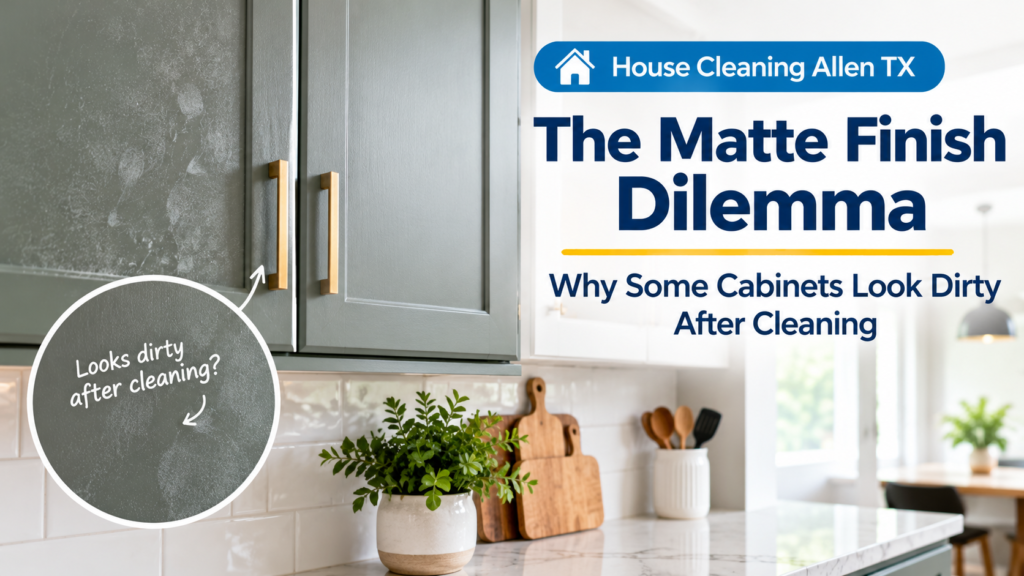
Have you ever wiped down your kitchen cabinets, stepped back to admire your work, and noticed that they still look streaky, cloudy, or dirty? For homeowners searching for House Cleaning Allen TX, this frustrating problem is more common than it seems. Matte-finish cabinets are designed to create a smooth, understated appearance, but their low-sheen surfaces can reveal fingerprints, cleaning residue, and wipe marks that glossy finishes might hide differently. Even when you use a clean cloth and a familiar household cleaner, the wrong combination of products and techniques can leave your cabinets looking worse after cleaning than before.
Matte cabinets have become popular because they offer a modern, elegant look without the reflective shine of traditional finishes. However, their appearance depends heavily on how they are maintained. Greasy fingerprints around handles, streaks near cooking areas, and cloudy patches across cabinet doors can make an otherwise spotless kitchen look neglected.
The good news is that these marks do not always mean your cabinets need an aggressive scrub or a stronger chemical cleaner. Sometimes, the problem is simply excess product, an unsuitable cloth, or residue that has not been removed properly. Understanding why these marks appear can help homeowners in Allen maintain their cabinets without damaging the finish.
Whether you clean your kitchen yourself or rely on professional assistance, learning how matte surfaces respond to everyday cleaning can make a noticeable difference in your home’s overall appearance.
Why Matte Cabinets Look Dirty Even After Cleaning
Matte finishes scatter light rather than reflecting it in the sharp, mirror-like way glossy surfaces do. This creates a soft, muted appearance that works well with contemporary kitchens, neutral color palettes, and minimalist interiors.
However, matte surfaces can make certain imperfections especially noticeable. A thin film of cleaner, a greasy fingerprint, or an uneven wipe can change the way light interacts with the surface.
The Difference Between Matte and Glossy Finishes
Glossy cabinets reflect more direct light, which can make the room feel brighter. Matte cabinets absorb and diffuse more light, giving them a softer appearance.
Neither finish is automatically easier to maintain in every situation. Glossy cabinets may reveal smudges and fingerprints through reflections, while matte cabinets may show cloudy patches, shiny rub marks, and uneven streaks.
On dark matte cabinets, dust and dried droplets can stand out against the deep color. On white or light-colored cabinets, greasy fingerprints and grayish residue may be more noticeable.
The finish itself is not necessarily dirty. Instead, the surface may be revealing traces left behind by everyday use or improper cleaning.
Why Wiping More Does Not Always Help
When cabinets still look streaky after cleaning, the natural reaction is to wipe them repeatedly. Unfortunately, additional wiping can spread leftover grease or cleaning solution across a larger area.
Using too much pressure may also create uneven sheen on certain coatings. If the cloth contains detergent residue, fabric softener, or trapped dirt, each pass may leave additional marks.
A better approach is to identify the source of the discoloration before attempting to remove it. A greasy fingerprint requires a different response from dried water, leftover cleaner, or a finish that has been worn down.
Four Common Causes of Streaks, Fingerprints, and Cloudy Cabinet Doors
Matte cabinets can collect several types of visible marks throughout the day. Understanding their causes makes it easier to select an appropriate cleaning method.
1. Fingerprints and Natural Skin Oils
Cabinet doors receive constant contact from hands. Every time someone opens a pantry, reaches for a glass, or pulls out a cooking utensil, small amounts of natural skin oil transfer to the surface.
These oils can accumulate around handles, drawer edges, and frequently used doors. On matte finishes, they may appear as darker smudges or unusually shiny patches.
Kitchen cabinets near the stove can be particularly vulnerable because airborne cooking grease may mix with fingerprints and household dust.
What helps: Use a soft microfiber cloth lightly dampened with water, provided the cabinet manufacturer’s care instructions permit it. If grease remains, use a small amount of a manufacturer-approved cleaner and wipe gently. Avoid saturating the surface.
2. Cleaning Product Residue
More cleaner does not necessarily mean cleaner cabinets.
Some household products contain detergents, oils, fragrances, polishing ingredients, or other additives that can leave a film behind. If the product is unsuitable for the cabinet coating, it may create cloudy streaks or an uneven appearance.
Using a concentrated solution when a diluted one is required can make the problem worse. In some cases, the residue attracts additional dust, causing the cabinets to look dirty again soon after cleaning.
What helps: Check the cabinet manufacturer’s recommendations before choosing a cleaning product. Use the smallest appropriate amount and remove any remaining residue according to the product instructions. Do not mix cleaning chemicals or apply multiple products in an attempt to correct the same marks.
3. Using the Wrong Cloth
The cloth matters just as much as the cleaner.
A rough towel may scratch delicate coatings, while a cloth used for greasy countertops can transfer oils onto cabinet doors. Fabric softener residue on laundry-cleaned microfiber cloths can also interfere with cleaning performance.
Paper towels may leave lint or create excessive friction on certain delicate finishes. Meanwhile, a saturated cloth can spread water across the surface, creating visible drying marks.
What helps: Choose a clean, soft microfiber cloth that has not been used for greasy tasks. Wash cleaning cloths according to their care instructions, avoid fabric softener, and keep separate cloths for applying a cleaner and drying the surface when the manufacturer’s guidance supports that approach.
4. Hard Water and Dried Droplets
Water can leave mineral deposits when droplets evaporate, particularly in homes with hard water. These deposits may appear as pale spots, cloudy streaks, or faint rings.
Cabinets near sinks and dishwashers may develop these marks from splashes and condensation. Dark matte surfaces often make dried droplets easier to notice.
What helps: Avoid allowing excess water to sit on the cabinet surface. Wipe splashes promptly with a suitable cloth and dry the area gently. Do not apply vinegar, acidic descalers, or abrasive mineral removers unless the cabinet manufacturer explicitly approves them for that finish.
The Wrong Cleaning Products Can Damage Matte Cabinets
One of the biggest mistakes homeowners make is assuming that a cleaner suitable for countertops, glass, or stainless steel will also work on cabinet doors.
Cabinets can have different finishes, including painted wood, laminate, thermofoil, and specialized matte coatings. Each material may respond differently to moisture, friction, solvents, and cleaning ingredients.
Why All-Purpose Cleaners Are Not Always the Best Choice
Some all-purpose cleaners are formulated to remove a broad range of household dirt. However, they may contain ingredients that are unsuitable for certain cabinet finishes.
Strong degreasers can affect protective coatings, while products containing waxes or polishing agents may leave unwanted films. Abrasive powders and scouring pads can create scratches or permanently change the surface’s appearance.
Before using a new cleaner, review the cabinet manufacturer’s care instructions. If the product is approved, test it on a small, inconspicuous area and allow the surface to dry so you can assess the result.
Be Careful With Disinfectants and Specialty Sprays
Disinfectants, glass cleaners, furniture polishes, and specialty sprays should not automatically be considered safe for matte cabinets.
Some formulations may contain alcohol, solvents, acids, or other ingredients that affect particular finishes. Others may leave a residue that becomes visible under kitchen lighting.
Use these products only when they are specifically approved for the material and intended application. A product marketed as streak-free for glass may not be suitable for a painted or coated cabinet door.
Why Abrasive Sponges Can Create Shiny Spots
Matte finishes rely on a particular surface texture to produce their soft appearance. Scrubbing pads and abrasive sponges can alter that texture.
When a patch becomes smoother than the surrounding area, it may reflect light differently and appear shinier. This can resemble an oily fingerprint even after the surface has been thoroughly cleaned.
If the finish has already changed because of abrasion, additional scrubbing is unlikely to restore it. The affected area may require professional assessment or refinishing, depending on the material and severity of the damage.
A Safer Step-by-Step Method for Cleaning Matte Cabinets
The goal is to remove dirt without leaving behind excess moisture, cleaning residue, or friction marks. A gentle, consistent process is generally more effective than repeatedly scrubbing the same area.
Step 1: Check the Cabinet Material and Care Instructions
Determine whether your cabinets are painted wood, laminate, thermofoil, or another material. If you have documentation from the manufacturer or installer, use it to identify approved cleaning products and methods.
This matters because a method that works for one cabinet finish may damage another.
Step 2: Remove Loose Dust First
Use a clean, dry microfiber cloth to remove loose dust and particles.
Dust can act like an abrasive when rubbed against a surface, particularly if it contains grit from cooking or outdoor activity. Removing it before damp cleaning reduces unnecessary friction.
Pay attention to the tops of cabinet doors, trim, corners, and areas around handles.
Step 3: Dampen the Cloth Rather Than Soaking the Cabinet
If the finish permits damp cleaning, lightly moisten a clean microfiber cloth with water. The cloth should not be dripping wet.
Wipe a small section using gentle, even strokes. Avoid excessive pressure, especially around edges, seams, and areas where moisture could enter the cabinet structure.
Do not spray liquid directly onto the doors unless the manufacturer specifically recommends that method.
Step 4: Address Greasy Areas Separately
For persistent fingerprints or cooking grease, use a compatible cabinet cleaner according to its label and the manufacturer’s recommendations.
Work on a small area instead of applying cleaner across the entire kitchen. This makes it easier to control the amount of product and remove residue before it dries.
Never use a stronger chemical simply because the first attempt did not work. Confirm that the product is appropriate for the finish before proceeding.
Step 5: Remove Residue as Directed
Some approved cleaning products require a follow-up wipe with a clean, damp cloth. Others have different instructions.
Follow the product label rather than assuming that every cleaner should be removed in the same way. Leaving detergent or cleaner on a surface can contribute to streaking.
Step 6: Dry the Surface Gently
Use a separate, clean, soft cloth if the cabinet manufacturer’s instructions recommend drying after cleaning.
Avoid vigorous buffing, which can create friction marks or alter the appearance of certain matte coatings. Instead, use light, even movements and allow the surface to dry completely before judging the result.
If the marks remain after the surface is dry, investigate whether they are caused by residue, mineral deposits, abrasion, or permanent discoloration rather than repeating the same cleaning process.
How to Prevent Matte Cabinets From Looking Dirty Again
Once the cabinets are clean, a simple maintenance routine can help preserve their appearance and prevent stubborn buildup.
Wipe High-Touch Areas Regularly
Handles, drawer fronts, and cabinet doors near food preparation areas usually collect the most fingerprints and grease.
Inspect these areas regularly and clean them when marks appear, using an approved method. Removing fresh residue is generally easier than addressing layers of accumulated grime.
Address Cooking Grease Early
Cooking produces airborne oils that can settle on nearby surfaces. Using an appropriate range hood and following the manufacturer’s ventilation recommendations can help reduce residue throughout the kitchen.
Wipe up splashes and spills promptly, particularly around the stove and backsplash. Always allow hot surfaces to cool before cleaning nearby cabinet areas.
Keep Cleaning Cloths Truly Clean
A microfiber cloth that looks clean may still contain grease or detergent residue from an earlier task.
Wash cloths according to the manufacturer’s instructions and avoid fabric softener when caring for microfiber. Store clean cloths separately from used ones to prevent cross-contamination.
A dedicated cloth for cabinet doors can also help prevent oils from countertops and appliances from transferring to matte finishes.
Avoid Excessive Cleaning
Frequent cleaning is useful when it removes actual dirt, but constant rubbing can wear down some coatings over time.
Focus on visibly soiled areas and use gentle maintenance rather than repeatedly wiping every cabinet door without a reason. If a finish develops persistent shiny or dull patches, investigate the cause before continuing.
How Cabinet Cleaning Fits Into a Complete Home Cleaning Routine
Kitchen cabinets are only one part of a clean home. Dust, grease, and fingerprints can accumulate on nearby appliances, countertops, baseboards, light switches, and other frequently touched surfaces.
A coordinated cleaning routine addresses these areas without using the same products indiscriminately across every material.
Routine Cleaning for Everyday Maintenance
Regular household maintenance can include wiping cabinet fronts, cleaning handles, removing countertop crumbs, and addressing visible splashes around the stove and sink.
Other useful tasks include:
- Dusting accessible shelves and decorative objects.
- Wiping appliance exteriors with compatible products.
- Cleaning backsplash surfaces according to their material.
- Vacuuming and mopping floors with suitable methods.
- Checking corners and edges where dust and grease collect.
These small tasks help prevent buildup from becoming a more time-consuming problem.
When Deep Cleaning Makes Sense
A more detailed cleaning session may be useful when cabinet fronts have accumulated grease, the kitchen has been neglected during a busy period, or a home needs extra attention before guests arrive.
For homeowners considering deep cleaning Allen TX, it is helpful to ask which surfaces and detailed tasks are included. Deep cleaning services vary, and cabinet interiors, delicate finishes, and specialized stain treatment may not automatically be part of every package.
If a cabinet coating has been scratched, chemically damaged, or permanently discolored, ordinary cleaning may not restore it. A cabinet specialist may be better suited to evaluating damage that requires repair or refinishing.
Choosing the Right Cleaning Support
Some homeowners prefer to handle routine maintenance themselves but arrange professional assistance for more detailed household cleaning. Others benefit from regular appointments that help keep the entire home under control.
When evaluating residential cleaning Allen options, explain your concerns about matte cabinets and ask how the team handles delicate finishes.
The same attention to material compatibility matters when cleaning countertops, glass, wood, upholstery, and other surfaces throughout the home.
Choosing a Cleaning Service That Understands Surface Care
A professional cleaning service should recognize that different materials require different methods. Matte cabinets, for example, may need a gentler approach than durable tile or certain countertop surfaces.
Before scheduling a service, ask what is included, which products may be used, and whether special instructions can be accommodated.
Questions Worth Asking Before Booking
Consider asking:
- Does the cleaning checklist include cabinet exteriors?
- Can the team follow manufacturer-specific cleaning instructions?
- Are delicate finishes handled with suitable cloths and products?
- What is the difference between a standard visit and a deep clean?
- Can I request extra attention for grease-prone kitchen areas?
- Are recurring appointments available?
Clear communication helps set realistic expectations and reduces the risk of unsuitable products being used on delicate surfaces.
Finding a Service That Fits Your Needs
Homeowners researching Allen cleaning services or a maid service Allen TX can compare the scope of work, scheduling options, customer feedback, and communication practices.
If you need a cleaning company Allen TX residents can turn to for household maintenance, consider whether the provider offers the type of cleaning your home actually requires. Professional cleaners Allen homeowners hire should be able to explain their approach to delicate surfaces and clarify any limitations.
Different properties may also require different services. Move out cleaning Allen and move in cleaning Allen TX can help prepare a property for a change of occupancy, while apartment cleaning Allen may suit smaller living spaces with different cleaning priorities.
Businesses may require office cleaning Allen TX or commercial cleaning Allen to maintain professional environments. Properties undergoing renovation may need post construction cleaning Allen, while carpets that have accumulated embedded dirt may require carpet cleaning Allen TX from an appropriately equipped provider.
For ongoing household care, recurring cleaning Allen and weekly cleaning Allen TX can help maintain a consistent routine. If an urgent appointment is needed, ask whether same day cleaning Allen TX is available and what the service can realistically cover.
Homeowners who prioritize product choices can ask about eco friendly cleaning Allen options and whether those products are compatible with their specific cabinet materials.
When comparing the best cleaners in Allen TX, affordable maid service Allen, or a top cleaning company Allen Texas, look beyond promotional claims. A useful comparison considers reliability, service details, appropriate cleaning methods, and the overall value offered.
The same approach applies when searching for reliable house cleaning services in Allen TX, professional maid service near Allen Texas, affordable deep cleaning services in Allen, move out cleaning service in Allen TX, and trusted home cleaners in Allen Texas. The right provider should explain what is included, respect your preferences, and handle surfaces according to their care requirements.
Conclusion: Keep Matte Cabinets Clean Without Losing Their Finish
Matte cabinets can make a kitchen feel modern, warm, and refined, but their understated appearance can reveal fingerprints, streaks, and cleaning residue more easily than homeowners expect. The problem is not always a lack of effort. Sometimes, the wrong cloth, too much cleaner, excessive moisture, or aggressive scrubbing creates the very marks you are trying to remove.
The best approach is to identify the source of the problem, check the manufacturer’s care instructions, and use gentle, compatible cleaning methods. Regular attention to handles and cooking areas can prevent grease from accumulating, while clean microfiber cloths and careful product selection can reduce streaking.
For homeowners looking for House Cleaning Allen TX, understanding the needs of matte cabinet finishes is an important part of maintaining a kitchen that looks clean without risking unnecessary damage. Whether you manage everyday upkeep yourself or arrange professional cleaning, remember that the goal is not simply to wipe away dirt. It is to protect the finish, preserve its appearance, and keep your home looking its best.
Contact us at 817–609–7374 or visit https://maidmasterstx.com/ to book your service.