

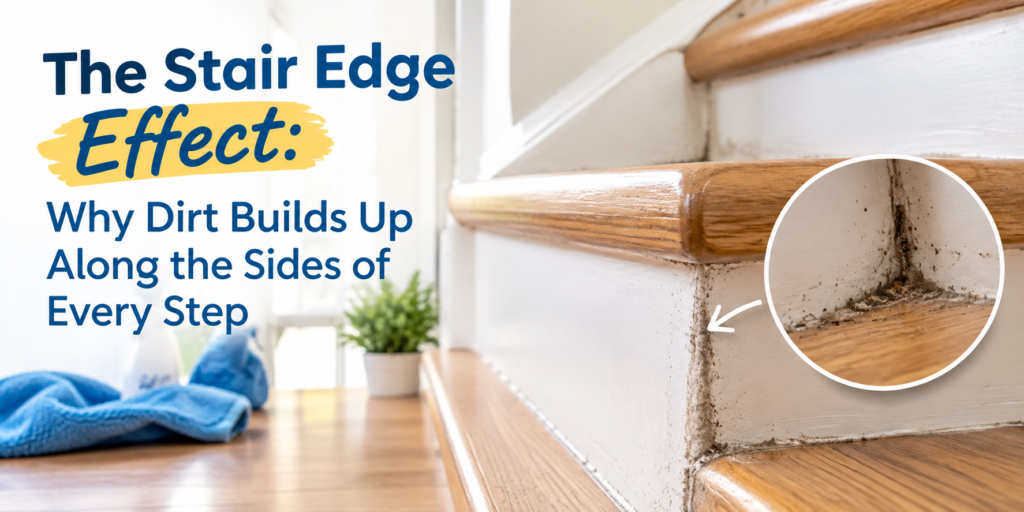
When you think about House Cleaning Plano TX, you probably picture the obvious areas: floors, countertops, bathrooms, kitchens, and living spaces. But some of the dirtiest parts of a home can be hiding in places you walk over every day without noticing. One example is the narrow edge along the sides of each stair. Dust, hair, lint, skin particles, and shoe debris can gradually collect along these edges, creating a dirty line that is easy to overlook during regular cleaning.
Stairs experience constant foot traffic, which means they are exposed to a steady stream of debris. Yet their shape can make them surprisingly difficult to clean thoroughly. A vacuum may quickly pass over the center of each step while leaving debris tucked against the baseboards, corners, risers, and outer edges.
Over time, these overlooked areas can make an otherwise clean staircase look dull and neglected.
Understanding why stair edges collect so much dirt — and knowing how to clean them correctly — can make a noticeable difference in the overall appearance of your home.
Why Do Stair Edges Collect So Much Dirt?
Stair edges naturally act as collection points for debris. As people walk up and down the stairs, particles are moved around by shoes, socks, airflow, and normal household activity.
Instead of staying evenly distributed across the entire step, lightweight debris often gets pushed toward the edges.
Several factors contribute to this effect.
Foot Traffic Moves Debris Around
Every trip up the stairs can introduce new dirt.
Shoes can carry small particles of soil, grass, sand, and other outdoor debris into the home. Even when shoes are removed at the door, socks and bare feet can still transfer hair, skin particles, and lint.
As people walk across the center of each stair, some of that material gets pushed toward the sides.
The more frequently the staircase is used, the faster this buildup can become noticeable.
Airflow Carries Lightweight Dust
Dust doesn’t simply fall straight down.
Air movement from HVAC systems, fans, open doors, and people moving through the home can cause lightweight particles to travel. Staircases can also create natural air channels between floors.
Some of that dust eventually settles along the edges of the steps, where it can remain undisturbed.
Stair Corners Are Difficult to Reach
The shape of a staircase creates narrow areas that aren’t always easy to reach with a standard vacuum attachment.
The center of a stair is relatively simple to clean. The edges are another story.
A vacuum head may not fit tightly against the wall or baseboard, leaving a thin strip behind. Repeated cleaning without addressing those areas can allow the strip to become darker over time.
What Kind of Dirt Collects Along Stair Edges?
The material found along stair edges isn’t always just ordinary dust.
Because stairs are high-traffic areas, the buildup can contain a mixture of different particles.
Common debris includes:
- Household dust
- Hair and pet hair
- Lint from clothing
- Dirt tracked in from outside
- Small pieces of grass
- Sand and soil
- Food crumbs
- Skin flakes
- Fibers from rugs and carpets
- Small pieces of paper or other household debris
The exact type of buildup depends on the household.
Homes with pets may see significantly more hair along stair edges. Families with young children may notice crumbs and small debris. Homes where people frequently wear shoes indoors may accumulate more outdoor dirt.
This is one reason Plano cleaning services need to pay attention to the details rather than simply cleaning the most visible portions of a staircase.
Why Regular Vacuuming May Not Be Enough
Vacuuming is one of the most important ways to maintain stairs, but technique matters.
A quick pass over the stairs may remove loose debris from the center while leaving material pressed against the edges.
This is especially common when someone uses a large vacuum head that is difficult to maneuver on narrow steps.
The Vacuum Path Matters
Imagine vacuuming a rectangular stair from the middle outward.
The vacuum removes much of the debris in its path, but the final inch or two near the wall may never receive direct suction.
Multiply that missed area by a staircase with 12, 15, or 20 steps, and a small cleaning gap can become a surprisingly noticeable buildup.
Hair Can Be Particularly Stubborn
Hair doesn’t always behave like loose dust.
It can become tangled with carpet fibers or caught in corners. Pet hair may collect into small clumps and become more difficult to remove when it is left untouched for long periods.
A narrow attachment or crevice tool can help reach areas that a standard vacuum head misses.
The Stair Edge Effect Is More Noticeable on Carpeted Stairs
Carpeted stairs can hide dirt more effectively than hard surfaces.
The fibers can trap small particles beneath the surface, while the edges create additional places for debris to settle.
You may not notice the buildup immediately.
Instead, the carpet may gradually begin to look darker near the sides of the stairs. In some homes, a visible line develops where the carpet meets the wall or trim.
This doesn’t necessarily mean the entire staircase is dirty. It can simply mean that the edges have received less detailed attention.
For households that want consistently clean-looking floors, carpet cleaning Plano TX services can be useful when routine vacuuming is no longer enough to refresh the carpet fibers.
Hard Stair Surfaces Have Their Own Challenges
Wood, laminate, tile, and other hard stair surfaces don’t trap debris in the same way carpet does, but they still have edges where dirt collects.
Dust can settle where the tread meets the riser. Small particles can gather along baseboards and in corners.
Wood stairs can also show dust particularly well, especially when sunlight enters from nearby windows.
A staircase can therefore appear dusty even after the main floor has been cleaned.
The solution isn’t necessarily more aggressive cleaning. It is more detailed cleaning.
How to Clean Stair Edges Properly
Cleaning stair edges doesn’t require complicated equipment, but it does require patience.
Start by removing loose debris before using any damp cleaning method.
Step 1: Remove Loose Debris
Use a vacuum with an appropriate attachment to clean the entire stair.
Work from the top of the staircase downward if that is safest and most practical for your setup.
Pay special attention to:
- Both sides of every tread
- The front edge of each step
- Corners where the tread meets the riser
- The area beside the baseboard
- The space between carpet and trim
- Any visible gaps or crevices
Slow, controlled passes are generally more effective than quickly moving the vacuum back and forth.
Step 2: Use a Narrow Attachment
A crevice tool can be extremely useful for stair edges.
Run it carefully along the sides of each step to pull out dust and hair that a wider vacuum head may leave behind.
For carpeted stairs, avoid pressing too aggressively into the carpet. The goal is to remove debris without damaging the fibers.
Step 3: Address Hard-Surface Edges
For hard stairs, use a suitable microfiber cloth or cleaning tool to capture remaining dust.
A damp cloth can help with certain surfaces, but always use a cleaning product appropriate for the flooring material.
Wood, in particular, should not be saturated with water.
Step 4: Don’t Forget the Risers
The vertical surface between steps is often overlooked.
Dust can settle on risers, especially near the corners.
A staircase should be treated as a collection of connected surfaces rather than just a series of horizontal steps.
How Often Should Stair Edges Be Cleaned?
There isn’t one schedule that works for every home.
A household with several pets and heavy daily stair traffic will likely need more frequent attention than a home where the stairs are rarely used.
Consider cleaning the stair edges more often when:
- Multiple people use the staircase every day
- Pets regularly go upstairs
- Shoes are worn inside
- You have carpeting on the stairs
- The staircase is near an exterior entrance
- You notice visible dust lines
- Hair collects quickly along the sides
- Someone in the household has allergies or sensitivities to dust
Routine vacuuming can keep loose debris under control, while occasional detailed cleaning can address buildup that routine maintenance misses.
Common Stair Cleaning Mistakes
Even people who clean regularly can accidentally leave stair edges behind.
Only Cleaning the Center
This is probably the most common mistake.
The center of the step is easy to see, so it naturally receives attention. The narrow strip beside the wall can be forgotten.
Moving Too Quickly
Stairs require more precision than a large open floor.
Moving the vacuum quickly may save time, but it can leave debris behind.
Ignoring the Corners
Corners can hold compacted dust, hair, and lint.
If you see a dark line forming in a corner, don’t assume it will disappear during the next routine vacuuming. Give the area direct attention.
Using the Wrong Cleaning Product
Hard surfaces vary significantly.
A product designed for tile may not be appropriate for finished wood. Using too much moisture on certain flooring can also create problems.
When you’re unsure, check the flooring manufacturer’s recommendations before applying a new cleaner.
Keeping Stair Edges Cleaner Between Deep Cleanings
Detailed cleaning doesn’t have to happen every day.
A few simple habits can help reduce buildup between professional or deep cleaning sessions.
Keep Entryways Clean
Since outdoor debris can eventually make its way onto stairs, keeping entry areas clean can help reduce the amount of dirt entering the home.
Use Mats Near Exterior Doors
A quality mat can capture some dirt before it reaches interior flooring.
Establish a Shoe Routine
Removing outdoor shoes at the entrance can reduce the amount of soil and debris carried throughout the home.
Vacuum High-Traffic Areas Regularly
You don’t necessarily need to deep clean the entire staircase every day. Regularly removing loose debris can prevent it from becoming compacted along the edges.
Check the Edges During Routine Cleaning
Take a few seconds to look at the sides of several stairs.
If you can see a buildup line, it’s a sign that the edges need more attention.
When Professional Cleaning Makes Sense
Some staircases are simply difficult to clean thoroughly.
Tall staircases, narrow steps, delicate carpeting, intricate trim, and heavy buildup can make detailed cleaning time-consuming.
Professional cleaners can approach these areas systematically rather than treating the staircase as an afterthought.
A professional cleaning service may also be helpful when you’re preparing for a move, recovering from a renovation, or trying to refresh a home that hasn’t received a detailed cleaning in a while.
For homeowners searching for deep cleaning Plano TX, stair edges are exactly the kind of overlooked detail worth including in a more comprehensive cleaning plan.
Similarly, people preparing for a move may want to make sure these areas are addressed before photographs, showings, inspections, or a final walkthrough.
Move out cleaning Plano services can help focus attention on details that are easy to miss when you’re busy packing and organizing.
Stair Edges Matter More Than They Look
A staircase may not occupy as much visual space as a kitchen or living room, but it is often one of the most heavily used parts of a home.
Every trip upstairs or downstairs moves additional debris through the space.
The center of the step gets cleaned because it’s easy to see. The edges are often forgotten because they’re narrow, awkward, and less obvious.
That is exactly why they deserve attention.
A clean staircase isn’t just about making the steps look good. Detailed stair cleaning helps remove the small particles that accumulate in corners, along trim, and around carpet fibers.
For homeowners looking for reliable house cleaning services in Plano TX, paying attention to these small details can make the difference between a home that looks generally tidy and one that feels genuinely well cared for.
A More Detailed Approach to House Cleaning Plano TX
The stair edge effect is a good reminder that cleaning isn’t always about the largest or most obvious surfaces.
Sometimes, the smallest spaces create the biggest visual difference.
When planning House Cleaning Plano TX, don’t overlook stair edges, baseboards, corners, and other narrow areas where dust naturally settles. These spaces may only be a few inches wide, but repeated foot traffic can turn them into noticeable dirt collection zones.
At Maid Masters, detailed cleaning means looking beyond the obvious surfaces and considering the areas that are commonly missed during a quick cleaning routine. From everyday maintenance to professional maid service near Plano Texas, a thoughtful cleaning approach can help keep your home looking fresher from the floors up.
Whether you need weekly cleaning Plano TX, a one-time deep clean, or help preparing for a move, don’t forget the edges. Your staircase may be telling you exactly where your cleaning routine needs a little more attention.
A cleaner staircase starts with the details — and those details often begin along the sides of every step.
Contact us at 817–609–7374 or visit https://maidmasterstx.com/plano-house-cleaning/ to book your service.