

White baseboards can make a home look bright, polished, and freshly cleaned — until they suddenly start looking gray. If you have ever wiped down your baseboards only to wonder why they seem dirty again a few days later, you are not alone. For homeowners looking into House Cleaning Colleyville TX, understanding why baseboards collect so much grime can make it easier to keep them looking clean for longer.
Baseboards sit in an awkward position. They are close to the floor, exposed to dust, kicked-up dirt, pet hair, cleaning residue, and everyday household activity. Because they are easy to overlook during routine cleaning, buildup can gradually become more noticeable.
The good news is that gray baseboards are usually not a sign that your home is unusually dirty. They are often the result of several small sources of buildup adding up over time.
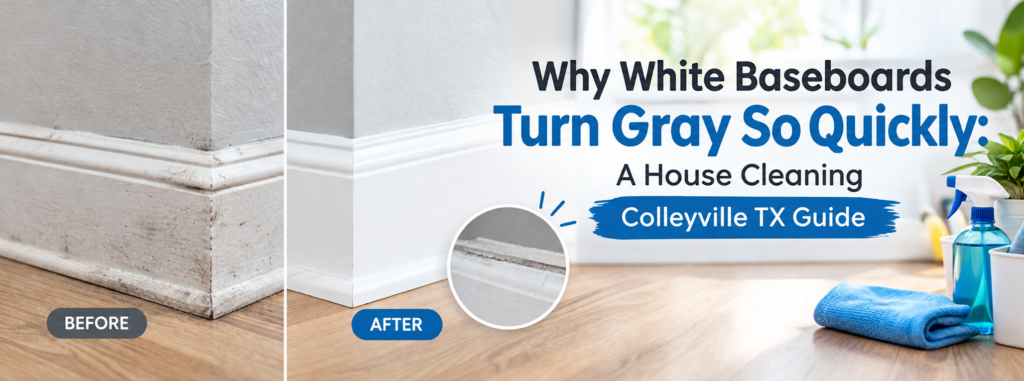
Why Do White Baseboards Turn Gray?
The simple answer is that baseboards are excellent dust and dirt collectors.
Unlike countertops or floors, baseboards are rarely cleaned every day. They also sit right where dust naturally settles and where air movement pushes particles along walls.
Several things can contribute to that gray appearance.
1. Dust Settles Along the Edges
Dust is constantly moving through your home. Air from HVAC systems, ceiling fans, open doors, and normal movement can keep tiny particles circulating.
Eventually, those particles settle on horizontal and slightly textured surfaces — including the top edge of your baseboards.
A thin layer of dust may not be obvious at first. But when dust combines with humidity, oils, pet hair, and other particles, it can become a darker film.
This is one reason regular Colleyville cleaning services can make such a noticeable difference in the overall appearance of a home.
2. Floors Kick Dirt Toward the Baseboards
Every time people walk across a floor, tiny particles can become airborne or move toward the edges of the room.
Vacuum cleaners can also push some dust toward walls, particularly if the machine is not designed to reach tightly against the baseboard.
Hard floors may contribute fine dirt particles, while carpets can release tiny fibers and trapped dust as people walk across them.
Over time, some of this material ends up sitting directly against the baseboards.
3. Mopping Can Leave Behind Residue
Cleaning your floors regularly is important, but the cleaning process itself can sometimes contribute to buildup.
Using too much floor-cleaning solution can leave behind a residue. If the mop is overly wet, water and cleaning solution can also travel toward the edges of the room.
Repeated exposure to residue can create a dull-looking film that attracts additional dust.
This is why more cleaning product does not necessarily mean cleaner surfaces. Using the correct amount and properly rinsing or changing cleaning tools can help prevent unnecessary buildup.
4. Pet Hair and Dander Add to the Problem
Homes with dogs and cats often have another source of baseboard buildup.
Pet hair, dander, outdoor dirt, and particles brought inside on paws can collect around the edges of rooms. Static electricity can also cause hair and dust to cling to surfaces.
Even if you vacuum your floors regularly, the areas around and underneath furniture may still allow debris to accumulate along the baseboards.
5. Hands and Feet Can Leave Marks
Baseboards may seem too low to touch, but they receive more contact than you might think.
Shoes, socks, children’s toys, vacuum attachments, furniture, and even pets can come into contact with them.
People may also accidentally brush against baseboards while moving furniture or cleaning.
Those small marks may not be noticeable individually, but repeated contact can make white trim look dull or gray.
Why Does the Gray Buildup Come Back So Fast?
One of the most frustrating things about cleaning white baseboards is how quickly they can look dirty again.
You may wipe them down on Saturday and notice a gray line by the following week.
That does not necessarily mean the cleaning was ineffective.
Baseboards are exposed to constant environmental factors. Dust continues to circulate, floors continue to collect dirt, and people continue to move through the home.
There is also a difference between removing loose dust and removing buildup.
A quick dry dusting may remove surface particles but leave behind the film that has bonded to the baseboard. Once the loose dust settles again, the surface can appear dirty almost immediately.
For homes that need more detailed attention, deep cleaning Colleyville TX services can focus on areas that are often missed during routine cleaning.
The Difference Between Dust and Grime
Not all gray baseboard buildup is simply dust.
Loose Dust
Loose dust usually sits on top of the surface. It can often be removed with:
- A microfiber cloth
- A soft duster
- A vacuum with a brush attachment
If your baseboards are only lightly dusty, this may be all they need.
Stuck-On Grime
Grime is different.
When dust mixes with moisture, oils, cleaning residue, or dirt, it can stick to the surface. This may require a damp microfiber cloth and an appropriate cleaning solution.
The longer the buildup remains, the more noticeable it can become.
That is why occasional detailed cleaning can be helpful even when a home receives regular maintenance cleaning.
How to Clean White Baseboards Without Damaging Them
White trim can be surprisingly easy to damage if it is cleaned too aggressively.
Before using any cleaning solution, consider the material and finish of your baseboards. Painted wood, MDF, PVC, and other materials can react differently to moisture and cleaning products.
Step 1: Remove Loose Dust First
Start by vacuuming or dusting the baseboards.
A vacuum attachment with a soft brush can be particularly useful because it removes loose particles without spreading them around.
Do not immediately wet a heavily dusty baseboard. Adding moisture to loose dust can turn it into a muddy film that is harder to remove.
Step 2: Use a Lightly Damp Microfiber Cloth
Once loose dust has been removed, use a microfiber cloth that is damp rather than soaking wet.
Work in small sections.
Microfiber is useful because its fibers can capture fine particles rather than simply pushing them around.
Step 3: Pay Attention to the Top Edge
The top edge of a baseboard is often one of the dirtiest areas.
It can collect a surprisingly thick line of dust because it is horizontal and frequently overlooked.
Run your cloth carefully along this edge and check for buildup.
Step 4: Dry the Surface
After wiping, use a dry microfiber cloth if necessary to remove excess moisture.
This is especially important for painted wood or MDF baseboards, which should not remain wet for extended periods.
What About Magic Erasers?
Melamine foam cleaning products can remove certain marks from painted surfaces, but they should be used carefully.
They work somewhat like very fine abrasive material. Scrubbing aggressively can dull or damage some finishes.
If you decide to use one, test it first in an inconspicuous location and avoid heavy pressure.
For routine baseboard maintenance, a microfiber cloth and appropriate cleaning solution are often a better first approach.
Common Baseboard Cleaning Mistakes
Even with good intentions, a few cleaning habits can make baseboards harder to maintain.
Using Too Much Water
Baseboards do not need to be soaked.
Excess moisture can seep into seams, edges, or porous materials and may damage certain types of trim.
Applying Too Much Cleaner
More cleaning solution does not automatically produce better results.
Excess product can leave residue behind, which may actually attract more dust.
Skipping the Vacuum
If you immediately wipe a dusty baseboard with a wet cloth, you may simply turn loose dust into grime.
Removing loose debris first makes the rest of the cleaning process easier.
Using Rough Scrubbing Tools
Abrasive pads can scratch or dull certain painted finishes.
Start with the gentlest effective cleaning method and increase the level of cleaning only when necessary.
Cleaning Only the Most Visible Areas
Baseboards behind furniture, along hallways, under tables, and in corners can collect just as much dust as the areas you see every day.
A thorough cleaning should account for the entire room rather than just the obvious sections.
How Often Should Baseboards Be Cleaned?
There is no single schedule that works for every home.
A home with pets, children, heavy foot traffic, or construction activity may need more frequent baseboard cleaning than a quiet household with minimal traffic.
As a general maintenance habit, lightly dusting baseboards every few weeks can help prevent buildup.
A more thorough wipe-down can be included during regular cleaning appointments or seasonal deep cleaning.
Homes that have recently undergone renovation or construction may need additional attention because fine construction dust can settle on trim and other surfaces.
In those situations, post construction cleaning Colleyville can help address the dust and debris that remain after work is completed.
How Your Floors Affect Your Baseboards
Baseboard cleanliness is closely connected to floor cleanliness.
If floors contain a significant amount of dust, pet hair, or outdoor debris, some of that material will eventually migrate toward the edges of the room.
This is especially noticeable around entryways and high-traffic areas.
Keeping floors regularly vacuumed and mopped can reduce the amount of material available to settle onto your baseboards.
For homes with carpet, regular professional attention can also help remove deeply embedded dirt that routine vacuuming may not fully capture. Carpet cleaning Colleyville TX can be particularly useful for households with pets, children, or heavy foot traffic.
When Gray Baseboards May Need More Than Routine Cleaning
Sometimes gray baseboards are simply dusty. Other times, the discoloration may be more difficult to remove.
For example, you may be dealing with:
- Long-term grime
- Grease or cooking residue
- Nicotine or smoke residue
- Pet-related buildup
- Construction dust
- Scuff marks
- Old cleaning-product residue
- Paint or finish discoloration
If gentle cleaning does not restore the original appearance, avoid repeatedly scrubbing harder.
Aggressive cleaning can damage the finish without necessarily solving the underlying problem.
In some situations, the baseboards may need professional cleaning or, if the finish itself has changed, repainting.
Baseboards Are Easy to Forget During Routine Cleaning
One reason baseboards become noticeably gray is simply that they are out of sight.
Most people naturally prioritize surfaces that affect daily activities: kitchen counters, sinks, toilets, floors, tables, and other frequently touched areas.
Baseboards are lower on the priority list.
But they are part of the visual background of every room.
Clean floors next to dirty-looking trim can make an otherwise clean room feel less polished. On the other hand, clean baseboards can make floors, walls, and furniture look fresher.
That is one reason professional residential cleaning Colleyville services often include attention to detailed areas that homeowners may not have time to address.
Keeping White Baseboards Cleaner for Longer
Once your baseboards are clean, prevention becomes easier than repeatedly tackling heavy buildup.
Try these simple habits:
- Vacuum near walls and room edges regularly.
- Use a vacuum attachment to remove dust from baseboards.
- Wipe visible marks as soon as you notice them.
- Avoid oversaturating floors and baseboards during mopping.
- Use the recommended amount of floor-cleaning solution.
- Keep entryways clean to reduce outdoor dirt.
- Groom pets regularly to reduce loose hair.
- Include baseboards in your seasonal deep-cleaning routine.
- Check corners and areas behind furniture occasionally.
Small maintenance habits can keep a thin layer of dust from turning into a stubborn gray film.
Why Professional Cleaning Can Help
Even if you keep up with everyday cleaning, detailed surfaces can be difficult to fit into a busy schedule.
Professional cleaners can work through the home systematically, including areas that are easy to overlook.
Whether you need recurring maintenance, a more detailed cleaning, or help preparing a home for a move, choosing the appropriate service can make the process more manageable.
For example, move in cleaning Colleyville TX can help prepare a new home before furniture and belongings are fully in place. Move out cleaning Colleyville can help address accumulated dust and grime before a property is handed over.
Businesses have similar needs. Offices can collect dust along walls and trim just as homes do, making office cleaning Colleyville TX and commercial cleaning Colleyville useful for maintaining a consistently clean environment.
A Cleaner Home Starts With the Details
White baseboards turn gray because they live in one of the dirtiest zones of the home: close to the floor, where dust, dirt, pet hair, moisture, and everyday residue naturally accumulate.
The key is not to wait until the buildup becomes obvious.
Regular dusting, careful wiping, clean floors, and occasional detailed cleaning can prevent that familiar gray line from becoming a stubborn layer of grime.
If your home needs more than a quick touch-up, House Cleaning Colleyville TX can help address the small details that make a big difference in how clean your home looks and feels.
Clean baseboards may not be the first thing guests notice — but when they are bright, fresh, and free of gray buildup, the entire room can look more polished.
Contact us at 817–609–7374 or visit https://maidmasterstx.com/ to book your service.