

When you’re cleaning your home, water temperature probably isn’t something you think about very much. Turn on the faucet, grab a sponge, add some cleaner, and get to work. But does it actually matter whether you use hot or cold water? The answer is: sometimes.
Hot water can be helpful for certain types of cleaning, especially when you’re dealing with grease, oily residue, or heavily soiled surfaces. Cold or cool water, however, can be the better choice for other messes, particularly protein-based stains and certain fabrics. Understanding the difference can help you clean more effectively while avoiding unnecessary damage.
For homeowners looking for practical House Cleaning Keller TX advice, knowing when water temperature matters — and when it doesn’t — can make everyday cleaning easier.
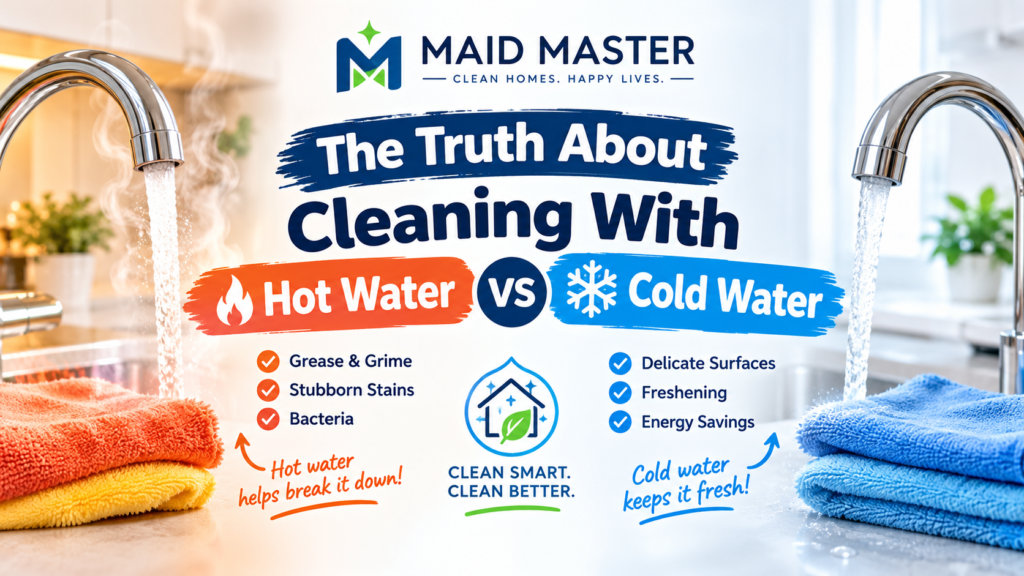
Does Hot Water Actually Clean Better?
It’s easy to assume that hotter water automatically means a cleaner surface.
That’s not quite how it works.
Water temperature can affect how quickly certain substances dissolve, loosen, or move from a surface. Heat can soften grease and oily residues, making them easier to remove. It can also make some cleaning products work more effectively, depending on the product’s instructions.
But hotter isn’t always better.
Some stains can actually become more difficult to remove when exposed to heat. Certain materials can shrink, warp, discolor, or become damaged when cleaned with water that’s too hot.
So instead of asking, “Is hot water better?” the better question is:
“What am I trying to clean?”
When Hot Water Makes Sense
Hot or warm water is particularly useful when you’re dealing with substances that respond well to heat.
Grease and Cooking Oils
Think about a greasy frying pan.
Cold water alone may not do much to break up the oily residue. Warm water can help loosen grease, while dish soap or an appropriate degreaser does the actual work of lifting and removing it.
This is why warm water can be useful when cleaning:
- Kitchen counters with oily residue
- Greasy stovetops
- Range hoods
- Cooking utensils
- Dishes and cookware
- Sticky kitchen surfaces
However, water temperature should always be considered alongside the cleaning product you’re using.
Hot water isn’t a replacement for the right cleaner.
Soap and Product Residue
Warm water can also help loosen certain residues left behind by soaps and household products.
Bathrooms are a common example.
Soap scum contains oils and other substances that can cling to surfaces. Warm water may help soften the buildup before you use a bathroom cleaner and scrub the surface.
This can make routine bathroom maintenance easier.
For more stubborn buildup, though, a thorough deep cleaning Keller TX service may be more appropriate than simply increasing the water temperature.
When Cold Water Is the Better Choice
Cold water doesn’t mean ineffective cleaning.
In fact, there are situations where starting with cold water is the smarter move.
One of the biggest examples is protein-based stains.
Blood and Other Protein-Based Stains
If you’ve ever gotten blood on clothing or fabric, you may have heard the advice to use cold water.
There’s a good reason for it.
Heat can cause proteins to bind more strongly to fibers, potentially making certain stains harder to remove. Rinsing with cold water first can help prevent the stain from becoming more firmly set.
This is one situation where reaching for hot water immediately can work against you.
The same general principle is useful when dealing with other protein-containing messes.
Instead of assuming that hotter water means stronger cleaning, identify the type of stain first.
Cleaning Clothes: Temperature Matters More Than You Think
Laundry is one area where water temperature can make a noticeable difference.
Modern detergents are designed to work effectively in cooler temperatures, and many everyday loads don’t require hot water.
Cold or cool water can also be gentler on many fabrics and may help reduce fading or shrinking.
Use Hot Water Strategically
Hot water may still be appropriate for certain heavily soiled items, linens, or situations where the care label allows it.
But don’t automatically select the hottest setting for every load.
Always check the garment’s care instructions first.
Delicate fabrics, dark clothing, elastic materials, and specialty garments may require different treatment.
Cold Water Isn’t “Weak”
A common misconception is that cold-water washing doesn’t clean properly.
Modern laundry detergents are formulated to work in a range of temperatures. For many everyday loads, cold water can be perfectly adequate.
The key factors include the detergent, amount of soil, type of fabric, washing cycle, and length of the wash.
Water temperature is only one piece of the cleaning equation.
What About Floors?
Floor cleaning is another area where people often assume hot water is automatically superior.
In reality, the correct approach depends on the flooring material and cleaning product.
Hard floors can often be cleaned effectively with warm water and an appropriate cleaner. But excessive water or excessive heat can be problematic for certain flooring materials.
Hardwood Floors
Wood and excessive moisture don’t make a great combination.
Standing water can seep into seams and potentially cause swelling, warping, or other damage. Very hot water can also be inappropriate for some finishes.
Instead, follow the flooring manufacturer’s cleaning recommendations and use a properly wrung-out mop rather than soaking the floor.
Tile Floors
Tile is generally more tolerant of moisture than hardwood, but that doesn’t mean you need boiling-hot water.
Warm water combined with the correct cleaner can be enough for everyday maintenance.
For grout buildup, the right cleaning method and product matter much more than simply increasing the temperature.
Laminate Floors
Laminate flooring can be sensitive to excessive moisture.
Avoid saturating the surface. A lightly damp cleaning method is typically safer than flooding the floor with hot water.
When in doubt, follow the manufacturer’s instructions.
Hot Water vs. Cold Water for Kitchen Cleaning
The kitchen is probably where you’ll notice the difference between water temperatures most often.
Grease, oils, food residue, and sticky substances can respond differently to temperature.
For greasy surfaces, warm water can help soften the residue before you wipe it away.
But there’s an important detail:
Don’t rely on water temperature alone.
A quality dish soap or appropriate degreaser is doing much of the work.
If you have a thick layer of grease on a surface, repeatedly applying hotter water isn’t necessarily going to solve the problem. You need the right product, enough dwell time, and appropriate agitation.
This is particularly important when cleaning areas like stovetops, cabinet fronts, backsplashes, and range hoods.
The Myth of “Hot Water Kills Everything”
One of the biggest misconceptions about hot water is that simply using very hot water makes a surface sanitary.
It isn’t that simple.
Water needs to reach specific temperatures and remain at those temperatures for particular lengths of time to reliably destroy many microorganisms. The temperature of ordinary hot tap water is not equivalent to a professional sterilization process.
For everyday household cleaning, the focus should be on using an appropriate cleaning or disinfecting product according to its label directions.
Cleaning and disinfecting are also different steps.
Cleaning removes dirt and debris.
Disinfecting uses a product designed to reduce or kill certain microorganisms on a surface.
Hot water alone should not be treated as a substitute for proper disinfection.
Don’t Forget the Cleaning Product
If you’re trying to decide between hot and cold water, check the cleaner first.
Some products have specific instructions regarding dilution and water temperature.
Always follow the manufacturer’s directions.
Using extremely hot water when the product doesn’t call for it can be unnecessary or even counterproductive. Likewise, changing the recommended dilution ratio can affect how well the product performs.
More cleaner isn’t necessarily better.
More heat isn’t necessarily better.
Good cleaning is about using the right method for the specific surface and mess.
What Professional Cleaners Know About Water Temperature
Experienced Keller cleaning services don’t simply use the hottest water available.
Professional cleaning requires understanding surfaces, materials, soil types, cleaning chemicals, and appropriate techniques.
A cleaner approaching a greasy kitchen surface is thinking differently from someone treating a protein-based stain on upholstery.
A hardwood floor requires a different strategy from tile.
A delicate fabric requires a different approach from a heavily soiled bathroom floor.
That’s why professional cleaning isn’t simply about working harder. It’s about knowing what method is appropriate.
Hot Water Isn’t a Substitute for Scrubbing
Another common misconception is that hot water eliminates the need for physical cleaning.
It doesn’t.
Heat can loosen certain types of soil, but you still need to remove the loosened material from the surface.
That’s where mechanical action comes in.
Wiping, brushing, scrubbing, vacuuming, or mopping physically removes dirt and residue.
Think of cleaning as a combination of factors:
The right product + the right temperature + the right amount of time + the right physical action = better cleaning.
Ignoring any one of these can reduce the effectiveness of the process.
What About Carpet Cleaning?
Carpets are another situation where water temperature needs to be considered carefully.
Professional carpet cleaning involves more than simply applying hot water to the carpet.
The carpet fiber, backing, stain type, cleaning solution, extraction method, and equipment all matter.
Using excessive moisture or inappropriate temperatures can potentially damage carpet fibers or create other problems.
If your carpets have accumulated heavy soil, stains, or odors, professional carpet cleaning Keller TX services may provide a more appropriate solution than experimenting with different water temperatures at home.
Move-In and Move-Out Cleaning
Water temperature can also play a role in larger cleaning projects.
When preparing a property for new occupants, move in cleaning Keller TX often involves cleaning kitchens, bathrooms, floors, cabinets, appliances, and other areas that may have been neglected.
Likewise, move out cleaning Keller requires attention to accumulated dirt and residue throughout the property.
These jobs require more than simply choosing hot water.
A successful move-related cleaning involves working systematically through the home and using the appropriate products and techniques for different surfaces.
Commercial Cleaning Requires the Same Principle
The same idea applies outside the home.
For office cleaning Keller TX and commercial cleaning Keller, professional cleaners may encounter everything from fingerprints and food residue to dust, grease, restroom buildup, and high-traffic floor soil.
Different areas require different approaches.
A break room counter may need grease removal.
A glass door may need streak-free cleaning.
A restroom may require cleaning followed by appropriate disinfection.
A carpeted hallway may need vacuuming or professional extraction.
Using the same water temperature and technique for every surface isn’t efficient.
Post-Construction Cleaning Is a Different Challenge
After construction or renovation, cleaning becomes even more specialized.
Post construction cleaning Keller can involve fine dust, adhesive residue, construction debris, and material-specific messes.
Fine construction dust can settle on surfaces throughout a property, including places that initially appear clean.
Simply using hot water won’t solve the problem.
The cleaning process needs to account for the type of dust, surface material, residue, and appropriate removal method.
Trying to force every type of construction mess away with excessive water can potentially create additional problems.
A Simple Rule for Choosing Water Temperature
If you’re standing at the sink wondering whether to turn the faucet toward hot or cold, use this simple framework.
Choose Warm or Hot Water When:
- You’re dealing with grease or oily residue.
- You need to loosen certain sticky buildup.
- The surface and cleaning product allow it.
- You’re washing items that are safe for warmer temperatures.
Choose Cold or Cool Water When:
- You’re treating a protein-based stain.
- You’re cleaning temperature-sensitive materials.
- You’re washing fabrics that may shrink or fade.
- The manufacturer’s instructions recommend cooler temperatures.
When You’re Unsure:
Check the care instructions or cleaning product label.
If you’re dealing with a delicate, expensive, or easily damaged surface, don’t experiment with extreme temperatures.
The Bigger Lesson: Cleaning Is About Technique
The truth about hot versus cold water is less dramatic than many cleaning myths suggest.
Hot water isn’t a magic cleaning solution.
Cold water isn’t ineffective.
Both have their place.
The most effective cleaning comes from understanding what you’re cleaning and choosing the appropriate combination of product, temperature, time, and technique.
That’s something professional cleaners consider every day.
Whether you’re maintaining a home between appointments or preparing for a major cleaning project, understanding these basics can help you avoid common mistakes.
Make Cleaning Easier With the Right Approach
You don’t need to turn every cleaning task into a science experiment. But understanding a few basic principles can help you work smarter.
Use warm water when heat can help loosen grease.
Use cold water when heat could set certain stains or damage a material.
Follow product instructions.
Check fabric and flooring care recommendations.
And don’t assume that hotter always means cleaner.
For homeowners who don’t have the time — or simply don’t want to spend their weekends tackling every cleaning project — professional House Cleaning Keller TX services can take care of the routine work while helping keep your home fresh and comfortable.
From residential cleaning Keller to deep cleaning Keller TX, move out cleaning Keller, and specialized carpet cleaning Keller TX, having the right cleaning approach makes a difference.
At the end of the day, the goal isn’t to use the hottest water possible.
It’s to use the right cleaning method for the job.
Contact us at 817–609–7374 or visit https://maidmasterstx.com/keller-house-cleaning/ to book your service.